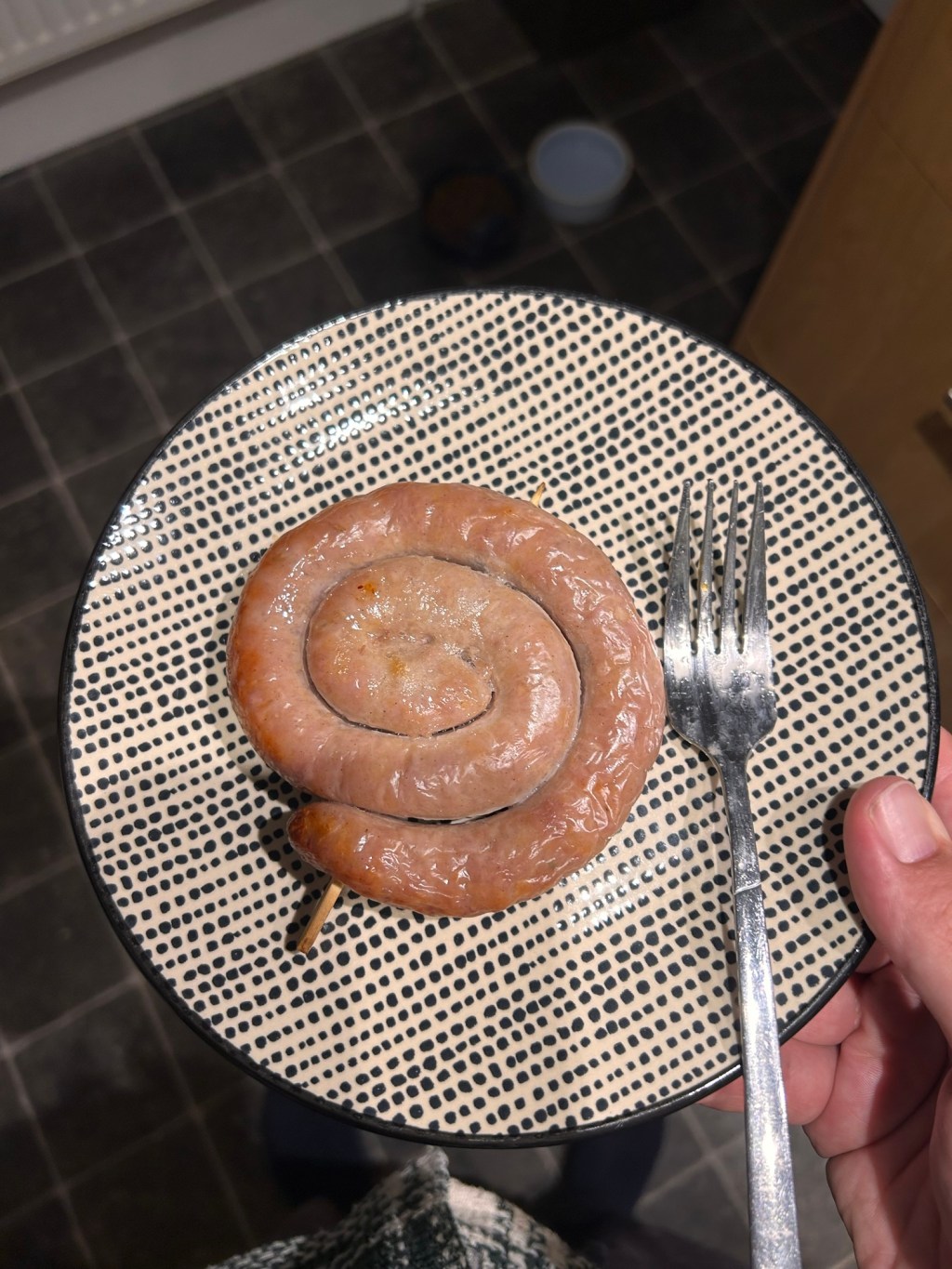
When I first started eating meat, I told myself that I wouldn’t just buy the cheapest meat available. This brought to mind specifically sausages. Sausages, in my mind, were a cheap way of selling the worst parts of a pig – the parts that wouldn’t sell anywhere else. I also presumed that it’d be the worst quality of rearing too. As sausages are generally the cheaper meat option they must mostly be filled with factory farmed meat.
My first encounter with a sausage was in fact my first encounter with meat. My mother-in-law, excited by the prospect of me choosing to take the plunge and eat meat, gave us a package wrapped in brown paper from the local butchers. On the label, printed in blocked black ink: Triple Pork Sausages. In the ingredients were listed pork, Toulouse sausage, and pork fat. On unwrapping, I was amazed by the dark colour and sheer size of these sausages. We decided to cook them in a tray bake with potato, carrot and brussel sprouts. The outcome was a far cry from the pale, dry vegetarian sausages I’d been used to. The main thing that differed was the fat content, these sausages dripped with clear fat and that played a massive part in the stronger flavour.
Sausages have been around for thousands of years. The earliest mention of a sausage-like recipe comes from Homer’s Odyssey in which Homer compares a restless Odysseus to someone turning a stomach filled with fat and blood. Although this is probably closer to a modern black pudding the idea of cooking and preserving pork within a casing remains. In Roman times, the sausage was a staple. The lucanica is still a part of Northern Italian cooking today. A sausage of smoked pork or beef lightly spiced coiled and often cooked in white wine. Whereas, in the Middle Ages sausage making became more in line with modern ideas of a sausage: a form of preservation. Cooks in the Middle Ages made use of smoke and spices to preserve the meat. Sausages therefore became a way to get the most from a pig. The use of spices in sausgage making also marks them as a item of class identity; with spices being a marker of money, sausages in the Middle Ages were not only a way of preserving meat but also of creating a dish local to your area and showing your class.
The modern sausage – the sausages I wasn’t so keen on eating were developed during the industrial revolution. Sausages became an easy way to get meat into people’s diets in a low cost way. Alan Davidson states in the Oxford Companion to Food – Sausages of Britain, that the use of cereals allowed sausage manufacturers to use less meat and drive down the cost of sausages, taking them out of the realms of status symbol and instead creating a classic working class dinner.
For my eating, I wanted the older style of sausage, one with a higher meat content that had been crafted rather than manufactured. Sausage now makes a large portion of my meals at home whether they are regional specialities such as a cumberland or a Toulouse style sausage.


Leave a Reply